

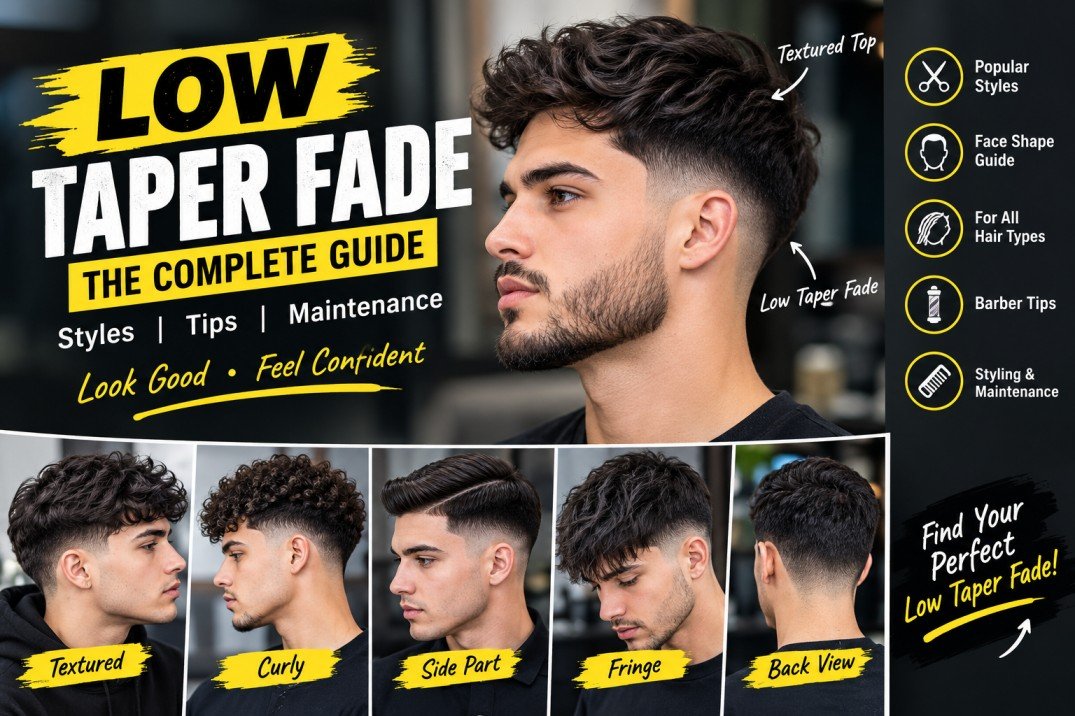
Low Taper Fade: Modern Barber & Client Guide
The low taper fade has become a refined choice for people who want clean grooming without sacrificing natural hair volume. Its transition stays low around the sideburns, ears, and neckline, while the upper sides and top retain more length. This creates a balanced haircut that can appear sophisticated, contemporary, professional, or relaxed.
For modern barbers, hairdressers, and salon professionals, the low taper fade requires more than simply changing clipper guards. Hair density, texture, growth direction, head shape, hairline, and client expectations all influence the finished design. For educated clients, understanding these elements makes consultation easier and helps communicate the desired haircut with greater precision.
What Is a Low Taper Fade?
A low taper fade gradually reduces hair length around the lower perimeter of the haircut, especially near the sideburns, ears, and neckline. The transition remains relatively low, so the upper sides stay fuller than they would with many conventional fade designs. The result is a subtle gradient with a clean, controlled appearance.
The words low, taper, and fade describe different aspects of the design. “Low” refers to placement, “taper” describes the gradual reduction toward the edges, and “fade” describes the blended transition between lengths. Because barber terminology can vary, a reference photograph and detailed consultation can be more useful than the haircut name alone.
- Low fade placement
- Tapered sideburns
- Clean ear area
- Neat neckline
- Gradual transition
- Preserved side fullness
- Natural silhouette
- Modern finish
Low Taper Fade vs. Low Fade
A low taper fade generally concentrates the shortening around the perimeter, while a traditional low fade may create a more continuous faded band across the lower sides and back. The distinction is subtle but important because clients who request a taper may want considerably more side weight preserved than someone requesting a conventional low fade.
Modern barbers should therefore clarify the desired fade height, side fullness, shortest length, neckline, and top length before cutting. Clients can avoid misunderstandings by explaining whether they want a compact taper or a more extensive faded area. A reference image showing the side and back profile is particularly helpful during consultation.
- Taper stays compact
- Low fade covers more area
- More side weight remains
- Contrast can vary
- Sideburns are tapered
- Neckline is refined
- Terminology can differ
- Photos improve communication
How Modern Barbers Cut a Low Taper Fade
A professional low taper fade starts with observation. The barber examines the client’s natural hairline, sideburns, temples, neckline, hair density, growth direction, head shape, and existing hairstyle. The desired taper height is then established before removing unnecessary weight. This planning helps maintain the intended silhouette instead of accidentally creating a higher fade.
Clippers and trimmers are used progressively, with guards and lever positions adjusted according to the hair rather than following one rigid formula. Scissor-over-comb may be useful when additional weight needs controlling above the taper. Experienced professionals also preserve the upper side panel where appropriate, creating a gradual transition rather than an overly hollow appearance.
- Begin with consultation
- Analyze hair density
- Check growth direction
- Establish the guideline
- Select clipper guards
- Blend progressively
- Preserve required weight
- Detail the perimeter
Clipper Blending Techniques for a Clean Finish
The defining skill in a low taper fade is controlled blending. A barber gradually connects shorter lengths with longer hair so that no obvious steps or harsh horizontal lines remain. Lever adjustments, guarded clipper work, trimmer detailing, clipper-over-comb, and controlled flicking motions can all contribute to a smooth transition.
Professional finishing requires examining the haircut from several angles. A blend that looks balanced from the front may reveal a dark patch around the ear or an uneven neckline from the side. Modern barbering therefore relies on careful visual inspection and small corrective movements rather than repeatedly removing large amounts of hair.
- Establish clean guidelines
- Start with shorter areas
- Adjust the lever
- Use controlled pressure
- Apply flick-out movements
- Blend dark areas
- Check both temples
- Inspect the neckline
Low Taper Fade for Different Hair Types
The low taper fade works across straight, wavy, curly, coily, fine, and thick hair, but the technique should be customized. Hair texture and density determine how visible the transition will appear and how much weight should be removed. A professional barber should adapt the blend rather than applying identical clipper settings to every client.
Straight hair can expose blending inconsistencies more clearly, while curly and coily textures can create strong visual contrast around the tapered perimeter. Fine hair often benefits from preserving side density, whereas thick hair may require controlled weight removal above the taper. Understanding the client’s natural texture is therefore central to professional haircut design.
- Straight hair
- Wavy hair
- Curly hair
- Coily hair
- Fine hair
- Thick hair
- Dense hair
- Textured hair
Low Taper Fade Styles for Modern Looks and Face Shapes
The low taper is a foundation rather than a single finished hairstyle. It can be combined with a textured crop, fringe, quiff, side part, slick back, curls, waves, buzz cut, Afro, twists, locs, or longer flowing hair. Keeping the taper low allows the top to remain the primary expression of the haircut.
Face shape can influence how the top is designed, but it should not be treated as a strict formula. Hair texture, density, head shape, natural hairline, lifestyle, and personal preference also matter. For example, adding controlled height can change the visual proportions of a rounder face, while texture or fringe can help balance a longer facial appearance.
- Textured crop
- Modern fringe
- Classic side part
- Contemporary quiff
- Slick-back style
- Curly top
- Natural waves
- Longer textured hair
How to Ask a Modern Barber for a Low Taper Fade
Clear communication produces better results than relying on haircut terminology alone. A client can say, “I want a low taper around the sideburns and neckline, keep the sides above the ears full, and blend it gradually.” The client should then specify the shortest length and explain what they want preserved on top.
A reference photograph is one of the most effective consultation tools because it communicates taper height, contrast, top length, neckline shape, and overall silhouette simultaneously. Clients should also mention their normal styling routine and whether they prefer a natural, textured, polished, or sharper finish. A skilled barber can then adjust the design accordingly.
- Say “low taper”
- Explain taper height
- Specify shortest length
- Request desired side fullness
- Discuss top length
- Show reference photos
- Explain styling habits
- Confirm the design
Low Taper Fade Maintenance, Styling, and Professional Tips
A low taper fade can remain visually balanced as it grows because the transition is concentrated near the lower perimeter. However, maintenance requirements depend on hair growth, contrast, shortest length, and personal standards. A skin-close taper usually shows regrowth sooner, while a slightly longer taper can provide a softer appearance between professional appointments.
For modern barbers and salon professionals, aftercare should be part of the service. Explain suitable styling products, brushing or finger-styling methods, neckline care, and realistic refresh intervals. The top can be adapted to the client’s routine, while the tapered areas primarily require cleanliness, controlled shape, and professional detailing to maintain the original design.
- Schedule regular refreshes
- Keep sideburns clean
- Maintain the neckline
- Choose suitable products
- Match products to texture
- Avoid excessive buildup
- Follow a simple routine
- Record client preferences
The low taper fade represents a balance between precision and individuality. Its low placement keeps the perimeter clean while preserving enough side and top hair for modern styling. For professionals, successful execution depends on consultation, proportion, blending control, texture awareness, and attention to the client’s natural growth patterns. For clients, the best approach is to communicate the desired taper height, shortest length, side fullness, neckline, top length, and styling direction. When the client and barber share the same visual goal, the low taper fade can become a polished foundation for both sophisticated and contemporary hairstyles.