

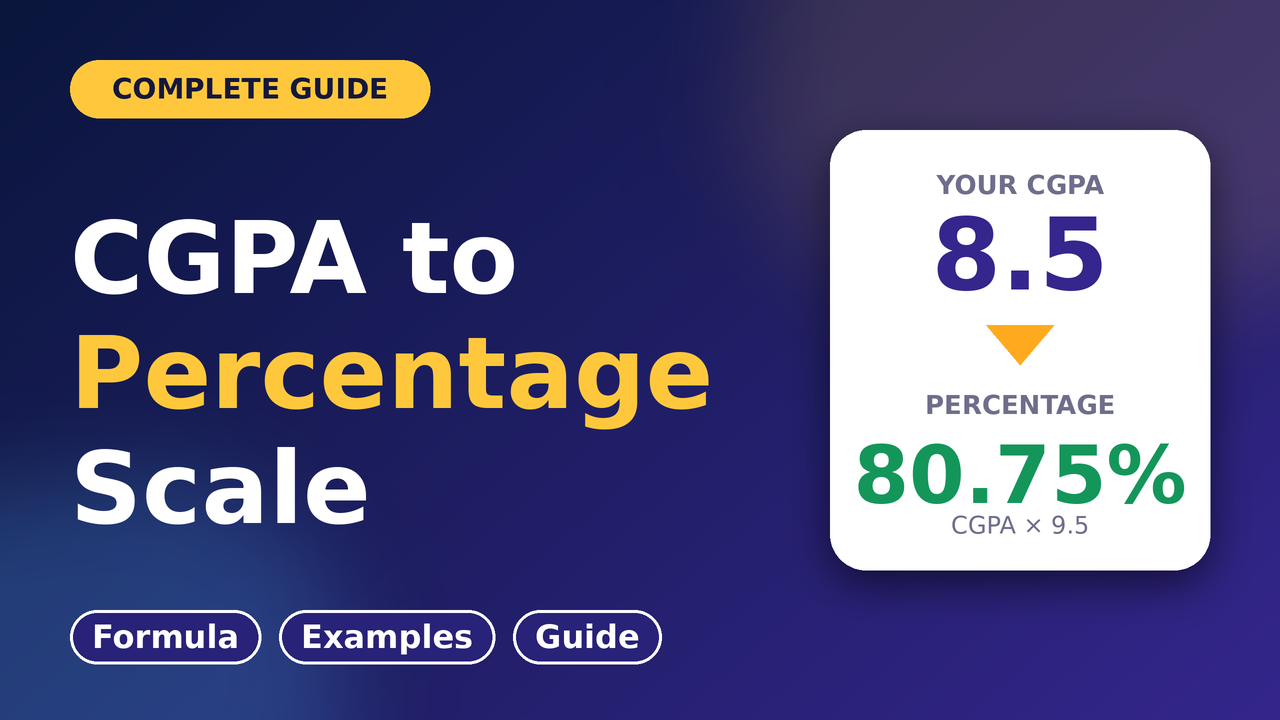
Better Understanding of Academic Performance
One major benefit of a CGPA to percentage scale is that it makes academic performance easier to understand. CGPA uses grade points, while percentage expresses achievement as a value out of 100. Students, parents, teachers, and employers can often understand percentage results more quickly.
Converting CGPA into percentage can provide another way to present academic achievement without changing the student’s original grades. It is particularly helpful when an organization asks applicants to provide marks or percentages instead of grade points on an application form.
- Makes results easier to understand.
- Converts grade points into percentage.
- Presents performance on a 100-point scale.
- Helps explain academic achievement.
- Supports clearer result interpretation.
- Useful for students and parents.
- Simplifies academic reporting.
- Provides an alternative result format.
Easier Comparison Between Students
Another important advantage is that percentage can make academic comparison easier in situations where students come from different grading systems. A percentage format gives institutions a familiar numerical representation that can be used alongside other academic information.
However, students should remember that different universities may use different conversion formulas. A percentage should therefore be compared only when the conversion method is officially recognized. Proper conversion can help admissions teams and organizations understand academic results more consistently.
- Supports academic comparison.
- Uses a familiar numerical format.
- Helps interpret different transcripts.
- Can simplify admission evaluation.
- Useful for academic screening.
- Helps compare equivalent results.
- Supports standardized reporting.
- Requires an appropriate conversion formula.
Helps With University Admissions
Many universities request academic information in a particular format during the admission process. Some applications ask for percentage marks even when a student’s transcript provides CGPA. A CGPA-to-percentage conversion can help students provide the requested information correctly.
This is particularly useful for students applying to institutions that use percentage-based eligibility criteria. Before submitting a converted result, applicants should check the university’s admission instructions to determine whether they accept self-calculated percentages or require an official conversion certificate.
- Useful for university admissions.
- Helps complete application forms.
- Supports eligibility checks.
- Makes academic information easier to report.
- Helps applicants follow requirements.
- Can simplify transcript interpretation.
- Useful for domestic applications.
- Helpful for international applications.
Supports Scholarship Applications
Scholarship programs often establish minimum academic requirements. Some may specify a required percentage, while students’ transcripts may report CGPA or GPA. Converting CGPA into the required percentage format can help students understand whether their academic result appears to meet a stated threshold.
A correct conversion also helps applicants avoid entering an incorrect value on scholarship forms. Students should carefully read the scholarship rules because some organizations specify their own conversion standards and may require official documentation rather than a personal calculation.
- Helps understand scholarship requirements.
- Supports application form completion.
- Makes eligibility easier to evaluate.
- Helps students check academic thresholds.
- Reduces reporting confusion.
- Supports merit-based applications.
- Useful for international scholarships.
- Official rules should always be followed.
Useful for Job and Internship Applications
Employers and internship providers may ask candidates to report academic results as percentages. Students whose transcripts use CGPA can use an approved conversion method when a percentage is specifically requested.
Providing academic information in the required format can make application forms easier to complete. However, applicants should never replace their official CGPA with an unofficial percentage when the employer specifically requests the original academic record. Both values can be provided when appropriate.
- Useful for job applications.
- Helpful for internship forms.
- Supports graduate recruitment.
- Makes academic information accessible.
- Helps complete percentage-based fields.
- Reduces application confusion.
- Can support eligibility verification.
- Original transcripts remain important.
Simplifies Different Grading Systems
Educational institutions use different grading systems around the world. Some use 4.0 scales, while others use 5.0, 10.0, or other systems. These differences can make academic results difficult to understand, especially when students apply to institutions in another country.
Understanding GPA scales and CGPA systems can help students interpret academic records more effectively. A properly approved percentage conversion provides an additional way to communicate academic performance and may make transcripts easier for people unfamiliar with the original grading system.
- Different institutions use different scales.
- 4.0 is a common GPA system.
- Some institutions use 5.0 scales.
- Some use 10.0 CGPA systems.
- Conversion improves result understanding.
- Helps explain academic records.
- Useful for international applications.
- Conversion rules still vary.
Improves Accuracy in Academic Reporting
Using an official CGPA-to-percentage formula can improve the accuracy of academic reporting. Instead of guessing an equivalent percentage, students can use the conversion method provided by their university or examination authority.
Accurate reporting is especially important for admission, scholarship, employment, and professional applications. An incorrect conversion may create confusion or cause an applicant to report a result that does not match institutional records. When available, an official conversion certificate provides stronger evidence.
- Encourages accurate reporting.
- Reduces calculation mistakes.
- Supports reliable applications.
- Helps maintain consistent records.
- Reduces misunderstanding.
- Encourages use of official formulas.
- Supports document verification.
- Useful for academic documentation.
Makes Academic Results More Flexible
A major benefit of CGPA-to-percentage conversion is flexibility. Students can understand and present their academic performance in the format requested by different organizations. This can be particularly valuable when moving between educational systems that use different methods of grading.
At the same time, students should understand that conversion does not change their actual academic achievement. It simply expresses the same academic information in another format. GPA scales and percentage systems measure performance differently, so the original transcript should always remain the primary academic record.
- Provides flexible result reporting.
- Helps meet application requirements.
- Supports different academic systems.
- Makes results easier to communicate.
- Does not change original grades.
- Preserves the original CGPA.
- Helps explain academic achievement.
- Supports multiple reporting formats.
Final Benefits of CGPA to Percentage Scale
The CGPA to percentage scale offers several practical benefits for students. It can make academic results easier to understand, support admissions and scholarships, simplify application forms, and improve communication between different educational systems.
The most important point is to use the correct conversion method. There is no single formula that applies to every institution. Students should check their university’s grading policy before converting CGPA into percentage, especially when the result will be used for an important academic or professional application.
- Improves result interpretation.
- Supports admission applications.
- Helps with scholarships.
- Useful for employment applications.
- Simplifies academic comparison.
- Supports international education.
- Improves reporting flexibility.
- Always verify the official conversion rule.
Frequently Asked Question
Is CGPA to percentage conversion always the same?
No. The conversion formula can vary according to the university, country, grading system, and academic authority. Some institutions provide a specific conversion factor, while others use a conversion table or proportional calculation. Always follow the official method.
Can I use any online CGPA calculator?
You can use an online calculator for an estimate, but important applications should use the conversion method officially recognized by your institution.
Why are GPA scales important?
GPA scales determine how grade points are represented and interpreted. Understanding the relevant scale is necessary before attempting an accurate CGPA-to-percentage conversion.